— Midweek Meditations:
thoughts, inspiration and encouragement
from ACF community members —
Who thinks that we only need God?
Who thinks that we only need other humans?
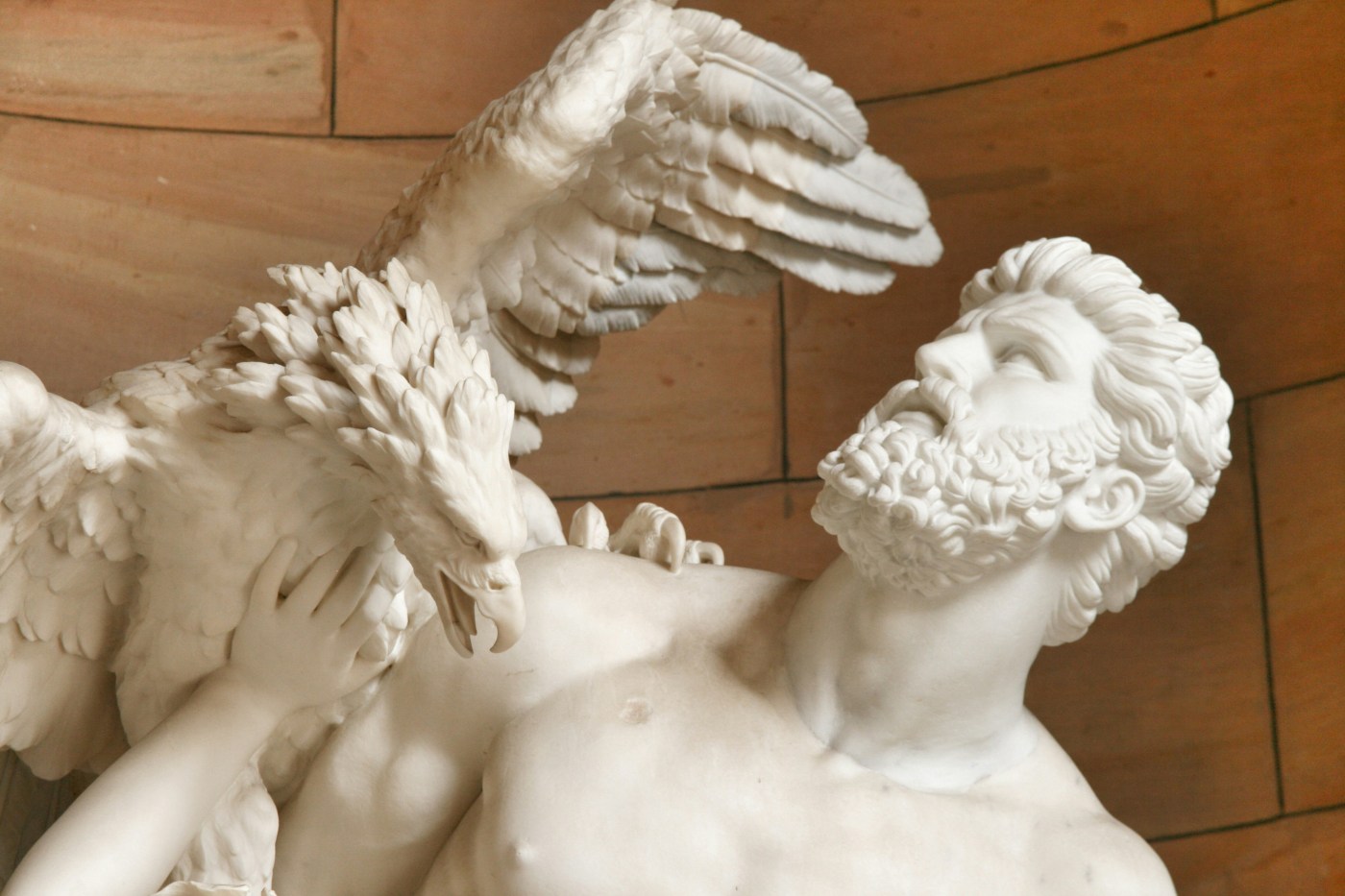
Recently, I read the poem Prometheus by Goethe (German / English). For the first time, I read it as a teenager but have read it many times since then. Let me share my thoughts with you, what influence it had on me and how my view on it changed.
Prometheus is often seen as a symbol of rebellion, individuality, and rational independence, particularly in his defiance of Zeus and the gods. He rejects the gods, particularly Zeus, embodying a defiant, almost rebellious stance towards divine authority. Prometheus represents the ideal of human autonomy and self-determination, which may resonate especially with someone growing up and navigating the transition from dependence to independence. As a teenager it was at a time of questioning authority and grappling with emotions.
But I was raised as a Christian and thinking I could only live with one or the other relationship, the same way Prometheus does.
Is our relation to God enough?
This question hinges on whether spiritual or divine connection alone can provide all the answers or fulfillment in life. In Goethe’s Prometheus, the protagonist rejects the need for divine approval, indicating that he finds fulfillment and purpose in his own actions and in his relationships to humanity, rather than to the gods. However, for many, the relationship with God represents the ultimate source of meaning, offering moral guidance, hope, and a deeper connection to the universe.
Is the only relation we need the one to other humans?
While Prometheus emphasizes human independence and the pursuit of human knowledge and growth, the notion that human relationships are enough is also a common theme in literature and philosophy. Humans often seek connection with others for love, support, and mutual understanding. However, this view can neglect the deeper existential or spiritual needs that might be fulfilled by a relationship with God or a higher power. So, while our relationships with others are vital, many argue that our inner sense of meaning or purpose may require a divine or transcendent dimension as well.
My experience with the poem as a teenager
On the one hand, as a teenager, the rationality and defiance of Prometheus likely resonated with my own desire for independence and self-definition. On the other hand, as an adult, I am now confused because emotions weren’t openly discussed but I feel them. His dialogue with Zeus is one of intellectual and emotional detachment. Goethe may have been exploring a type of heroism that is cerebral, logical, and deeply tied to individualism, which could have felt very foreign if you were navigating a period when emotional expression wasn’t fully encouraged.
Goethe’s Prometheus explores the tension between divine authority and human independence, which raises deep questions about the nature of relationships – both with God and with others. The poem seems to suggest that while our relationship with God can provide some meaning, it is the relationship with humanity that truly defines us as individuals. But as you noted, this theme may not be immediately relatable, especially during adolescence, when emotional connections are just beginning to be understood.
The answers to the questions in the beginning is one that you need to find and don’t be afraid that it may changes.
The ACF Midweek Meditations
are written by a diverse group of our church members with the intention to seek God’s fingerprints in our lives. They range from somber to humorous and are inspired by all facets of live and faith. Written by ordinary people from all walks of life, they reflect a wide range of Christian backgrounds and spiritualities.
Each week’s text portrays the individual viewpoint of its author. They might not always resonate with everyone, and are not meant to be understood as representing the Anglican Church Freiburg as a whole. Yet, as a church that is aiming to ‘Build a Community of Grace’ we seek to practice learning from and listening to one another.
We pray that these humble ponderings add a small spark of blessing to your week.

 Freiburg Anglican Church