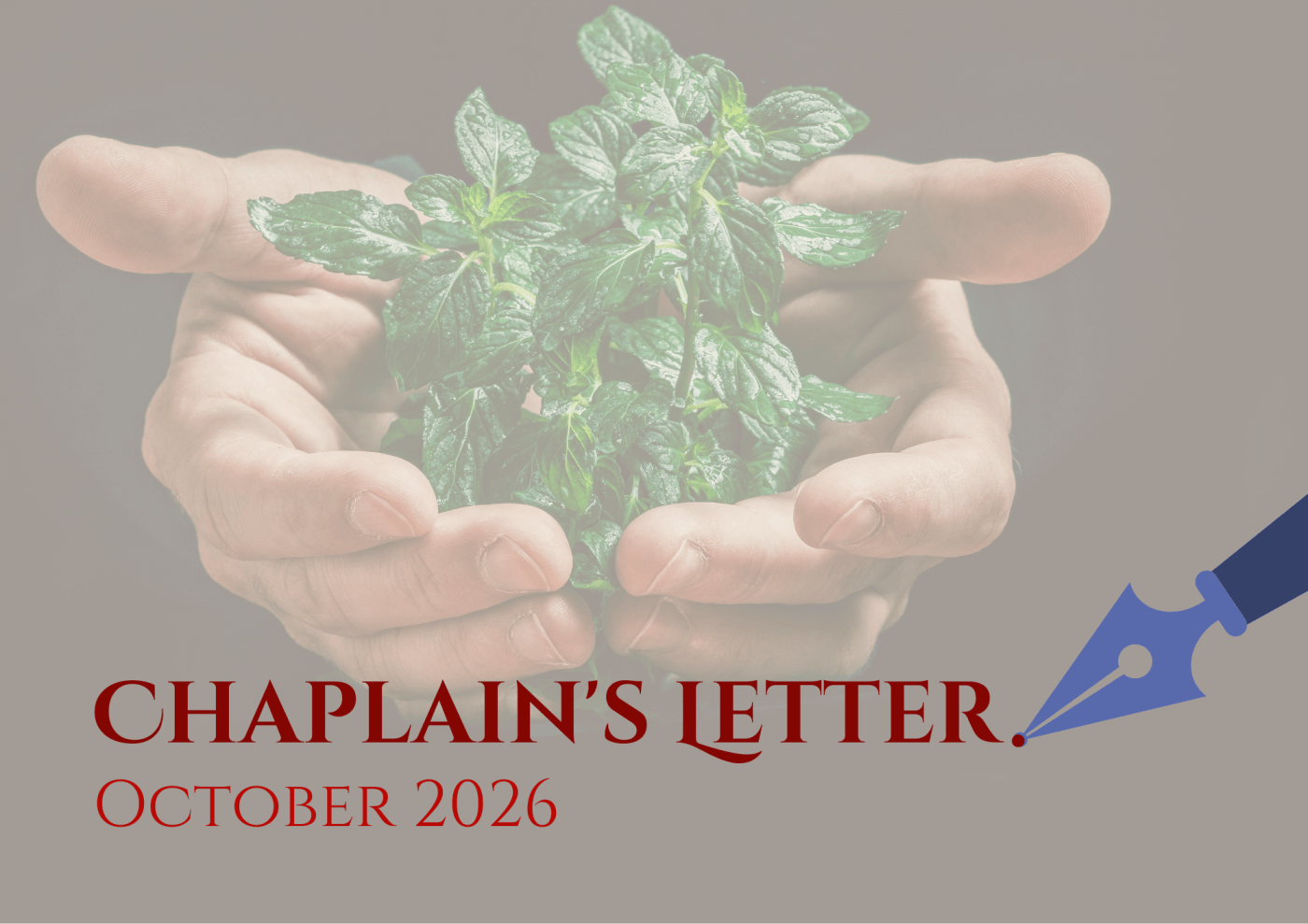
“The earth is the Lord’s, and everything in it.”
Psalm 24:1
Dear Friends,
October invites us to notice the world around us. Leaves change colour, the air becomes cooler, and the earth prepares for another season. There is beauty in this transition, but also a quiet lesson: we live within rhythms we did not create and cannot entirely control. Our lives depend upon gifts we often receive without noticing.
The Season of Creation, observed from 1 September to 4 October, gives Christians an opportunity to renew their relationship with the Creator and the whole created world. Its conclusion invites us to carry that commitment into the rest of the year.
Receiving creation as God’s gift
The Bible begins with God delighting in creation. Before the earth becomes useful to humanity, it is already good in God’s sight. Its worth comes from its relationship with the Creator.
Genesis 2:15 places humanity in the garden to cultivate and care for it. This is a calling to responsible service. The earth belongs to God; our presence within it carries responsibilities towards other creatures and those who will come after us.
The Sabbath extends this concern. Rest embraces workers, strangers and animals, while the land itself receives rest in Leviticus 25. God places limits upon relentless production. Creation needs space to recover, and human beings need freedom from the belief that everything must always produce more.
In Jesus Christ, God enters this material world. Water, bread and wine become bearers of grace. Colossians 1:20 speaks of God reconciling all things through Christ, while Romans 8 describes creation groaning in expectation of renewal. Christian hope embraces the healing of the world God loves.
We celebrate a Season of Creation because we need to learn again how to receive, give thanks and care. Worship can restore our attention, helping us recognise the sacred responsibility hidden within ordinary choices.
Preparing a Church that sustains life
Creation care belongs within the central purposes of the Church. The Anglican Communion recognises this in its Fifth Mark of Mission, which calls us to safeguard creation and sustain and renew the earth’s life.
Any diocesan or chaplaincy strategy for the future should give this commitment practical expression. Decisions about buildings, heating, travel, purchasing, food and finances all affect the world our neighbours inhabit. Environmental responsibility needs a place in budgets, leadership formation and the review of our common life.
For a congregation sharing premises, this may begin with conversations with its host church. Together, we can consider energy use, reduce waste, protect green spaces and develop habits of responsible hospitality. Young people should help shape these decisions, since they will live longest with their consequences.
Creation care also asks how we respond to suffering. The loss of a harvest, unsafe water or an uninhabitable home is a pastoral concern. Loving our neighbour includes attending to the conditions that make life possible.
To become ready for the future, the Church needs communities capable of adapting, sharing resources and caring for vulnerable people. A credible strategy connects what we proclaim on Sunday with what we practise throughout the week.
Seeking wisdom in an age of powerful intelligence
Artificial intelligence is changing how we work, communicate and make decisions. Discussions about possible superintelligence, systems that might exceed human abilities across many fields, raise further questions about power and responsibility. Whatever their future development, we must ask what purposes these technologies serve.
Digital activity has a physical foundation. AI depends upon computing infrastructure and electricity. The International Energy Agency identifies both its growing energy demands and its potential to help improve energy systems.
Technology may help us understand environmental change and use resources more wisely. Yet greater intelligence does not automatically produce greater compassion. A system can optimise a task without deciding whether that task serves the common good. Sensitivity to the carbon footprint of our use of digital platforms invites us to recognise the energy behind every online activity and to use these tools thoughtfully, with care for the earth and those who share it.
The Church has a responsibility to cultivate moral discernment: Who benefits? Who bears the costs? Does this use of technology protect dignity and sustain life?
As our tools become more powerful, we need deeper habits of humility, restraint and accountability. We also need to remain attentive to embodied life: the person beside us, the soil beneath us, the water we drink and the creatures with whom we share the earth.
This October, let us choose one change we can sustain and one commitment we can undertake together. May our worship nurture gratitude, and may our gratitude become care. The fragrance of Christ can reach our neighbours through a community that cherishes the world entrusted to it.
Prayer
Gracious God,
Creator and sustainer of all life,
teach us to receive the earth with gratitude
and to care for it with tenderness.
Forgive our wastefulness
and our indifference to the wounds of creation.
Help us to hear those whose lives
are threatened by its destruction.
Give your Church courage
to place the flourishing of life
at the heart of its plans.
In an age of powerful technologies,
grant us wisdom to use our knowledge responsibly,
humility to recognise our limits,
and love to seek the common good.
May our community bear the fragrance of Christ
through choices that protect your creation
and offer hope to generations yet to come.
Through Jesus Christ our Lord.
Amen.
Vinod Victor
October 1, 2026


